On a spring Saturday afternoon, the kind of warm, sunny day Dave Muffly relished, a hundred of his friends gathered at Magic in Palo Alto nearly six months after his death to celebrate his life.

On a spring Saturday afternoon, the kind of warm, sunny day Dave Muffly relished, a hundred of his friends gathered at Magic in Palo Alto nearly six months after his death to celebrate his life.
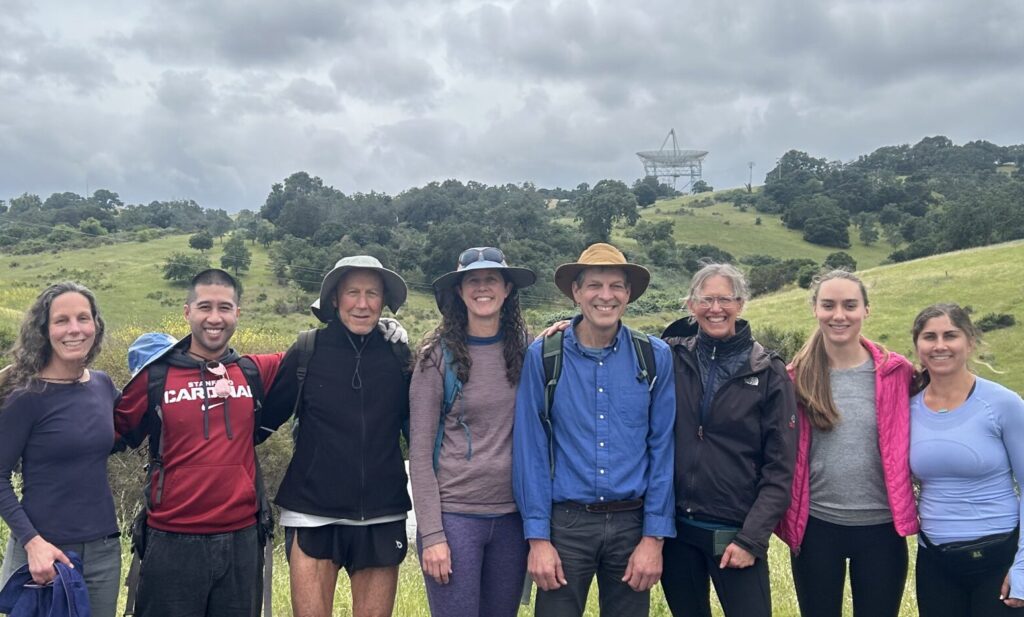
Prior to the reception at Magic, a handful toured the Stanford “Dish” recreational route to appreciate some of the thousands of native oaks Dave had a hand in planting there.
The reception was an informal gathering with potluck dinner. A half-hour program included four speakers, each of whom remembered a different aspect of Dave.

The reception was an informal gathering with potluck dinner. A half-hour program included four speakers, each of whom remembered a different aspect of Dave.
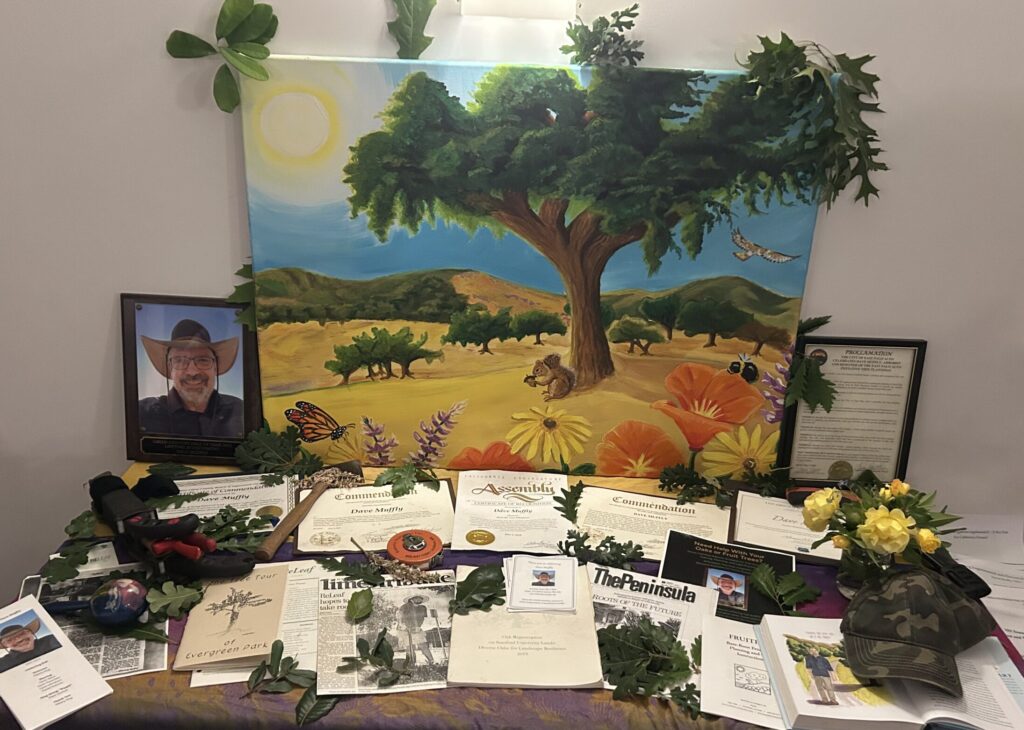
Guests were able to peruse a table of memorabilia including publications, awards, media coverage, and a painting, “Homage to Squirrel Dave,” created by friend Elise Dimick.
Resident fellow Hilary Hug, who first came to Magic only a year before Dave and who sustained a close friendship with him for more than 35 years, led in organizing and hosted the event.

Resident fellow Hilary Hug, who first came to Magic only a year before Dave and who sustained a close friendship with him for more than 35 years, led in organizing and hosted the event.

Magic resident and Stanford Health Care Chaplain Emily Linderman, who became acquainted with Dave during the final months of his life, was mistress of ceremonies.
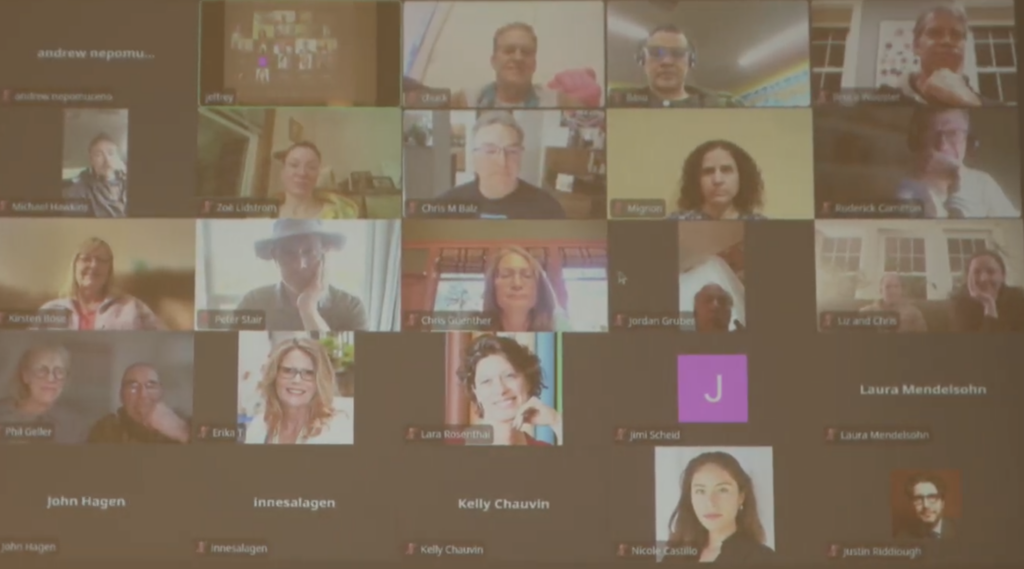
More than 30 friends Zoomed in from around the US and abroad.
More than 30 friends Zoomed in from around the US and abroad.
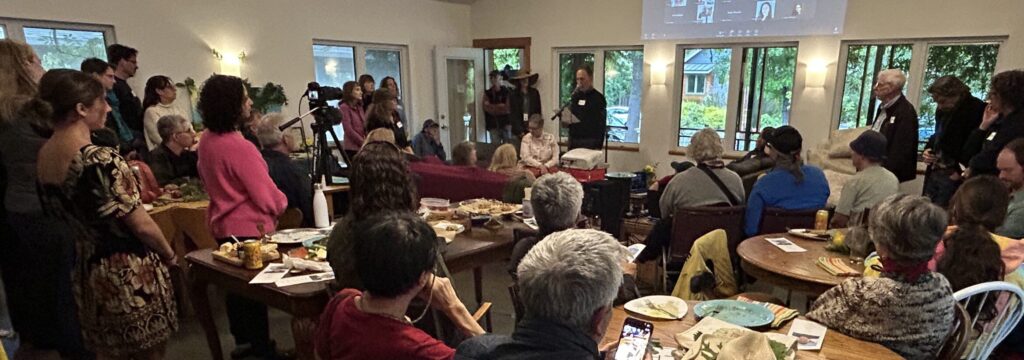
More than 60 gathered in person. Both remote and in-person attendees evidenced the diversity in the lives touched by Dave, ranging in age from twenties to nineties, and hailing from all over the US and a dozen different countries.
Chris Shen, Dave’s closest buddy from Stanford undergraduate days, with whom he sustained friendship for more than 40 years, and who was his traveling companion during a 2024 cross-country road trip, was the first of four speakers. Shen interspersed his recollections with readings from Dave’s many letters to him.
Summary (click here to view)
Dave’s search for purpose and community.
Shen traced Dave’s personal journey of self-discovery using letters Dave had written over the years. Initially feeling that his formal education failed to teach him how to generate meaning and purpose, Dave declared himself a “skill collector” and a “learning junkie” open to learning from anyone. He eventually found his calling while volunteering at Magic. Tasked with going door-to-door to talk to neighbors about trees, Dave realized his true passion: using arboriculture to foster human connection. He rewrote his life’s mission to focus on thinking for himself and for benefit of others, and surrounded himself with bright people building community.
Transcript (click here to view)
Transcript (first minute missing)
Thinking about that, he’s also looking back to where he just came from—to here, to school—and he’s trying to figure out what happened, what was missing. So Dave wrote about that. He started to identify what he missed, and he thought it was kind of a school failing. He said he wished that our school had taught people how to think for themselves and for others.
When I saw that, I figured most people would have said “think for themselves, period.” But Dave actually says in this letter that he wishes they would teach students to do things that come from the inside. He said if they did, there would be many more happy people.
So now Dave’s looking inward. He’s trying to figure out, Okay, what’s going to be that thing that makes me want to do whatever I do with my life? And he’s saying, Well, I don’t have anything on the inside. How am I going to find it? So he decides, Ah, I’m now going to look outside of myself. Which is kind of a new thing for Dave at this point.
Then Dave writes about a month later: “I am now a skill collector and learning junkie.” And he says in great confidence, “I will listen to anyone that knows what they are talking about today.” In his letter, he goes, “Today I learned about horses.” He had no expectation of what it was that was going to give him this spark. He didn’t know what was going to become the thing that he kept inside. But he decided, I’m going to listen to you, whoever it is.
A few letters later, he starts talking about who’s around him and who can inspire him, because now he needs that fuel to figure out what’s going to be inside him that he cares about. He starts remembering his time back here, both at school and his volunteer time at Magic. He says in a letter, “Having bright, motivated people to share ideas with—there’s almost nothing I love better than that.”
So Dave comes back here and he’s at Magic, but he hasn’t figured out what that spark is going to be yet. In fact, he wrote that he’s now paying rent with two requirements: one is “be nice,” and two is “don’t break shit.” I’m like, okay, good, Dave. Those are good things to live by. But he’s still looking.
And then there was the key letter that he sent to me that stood out from all the others. He writes that Magic has a grant that pays him to go door-to-door and ask people in the neighborhood about what they were looking for and what they might want for trees. He says door-to-door is not his strong suit; that’s not his comfort zone at that point, and it’s not what he wanted to do. But at the same time, he started sounding excited about it.
This is kind of a long quote, but I’m going to try and get it right. He says, “There are lots of people out there looking for the same sense of community, just like me. I think that people have a basic need for affirmation and love from our fellow humans. And now we’ve got a grant for me to do this organizing work, and I find it really amazing that we can get paid for me to go out and build community.”
I don’t know if I’m getting the right read on all this from these letters, but that looked to me like Dave’s complete new lifetime to-do list. He replaced his old goals with: Think for yourself and for others. Find motivation from within. Reach out to bright, amazing people. Always be willing to learn and course-correct for what you might want to do in the future. And then, after all that, find ways to keep on doing these things that matter to you.
He wrote lots of letters after that. He would talk about learning how to fix bikes and then teaching people how to fix bikes, or about finding the right running shoes. And there were plenty of stories of circular arguments and debates about things that he couldn’t resolve. My guess is that a lot of those stories had to do with the people who are here today.
So I’m hoping you realize that if you had one of those moments—or lots of those moments—with him, at that time, you were the bright, motivated person that Dave needed and Dave cherished. So on behalf of Dave, thank you for those moments.
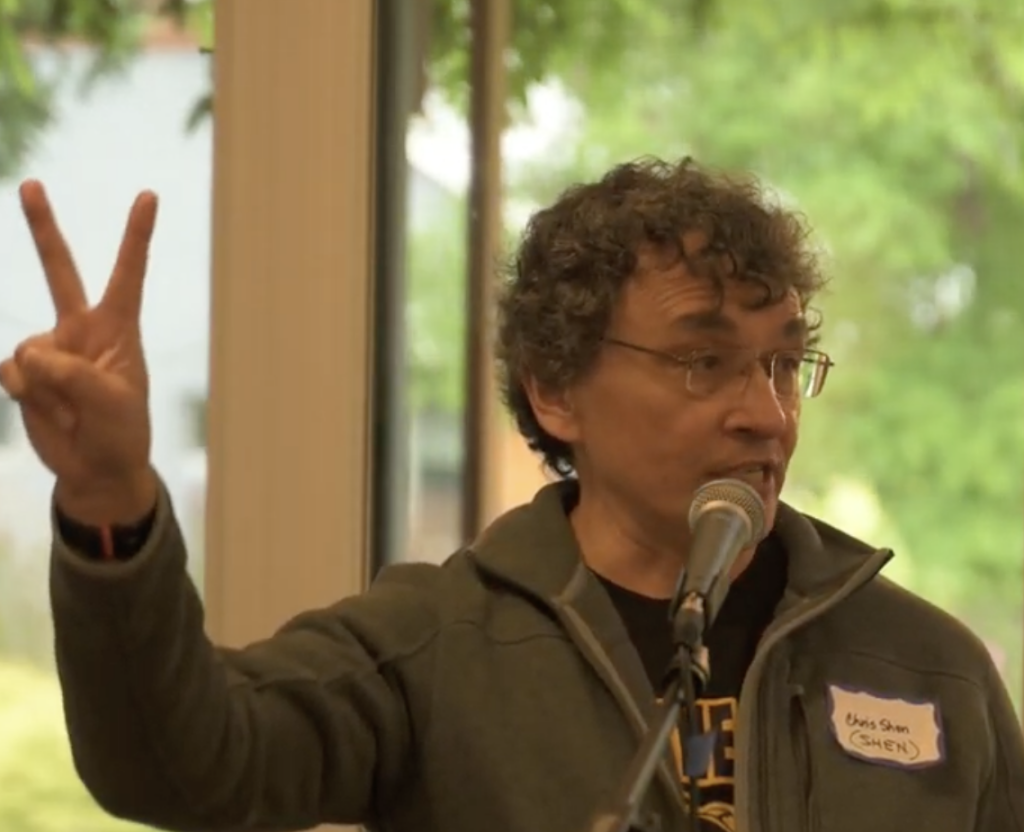
Chris Shen, Dave’s closest buddy from Stanford undergraduate days, with whom he sustained friendship for more than 40 years, and who was his traveling companion during a 2024 cross-country road trip, was the first of four speakers. Shen interspersed his recollections with readings from Dave’s many letters to him.
Summary (click here to view)
Dave’s search for purpose and community.
Shen traced Dave’s personal journey of self-discovery using letters Dave had written over the years. Initially feeling that his formal education failed to teach him how to generate meaning and purpose, Dave declared himself a “skill collector” and a “learning junkie” open to learning from anyone. He eventually found his calling while volunteering at Magic. Tasked with going door-to-door to talk to neighbors about trees, Dave realized his true passion: using arboriculture to foster human connection. He rewrote his life’s mission to focus on thinking for himself and for benefit of others, and surrounded himself with bright people building community.
Transcript (click here to view)
Transcript (first minute missing)
Thinking about that, he’s also looking back to where he just came from—to here, to school—and he’s trying to figure out what happened, what was missing. So Dave wrote about that. He started to identify what he missed, and he thought it was kind of a school failing. He said he wished that our school had taught people how to think for themselves and for others.
When I saw that, I figured most people would have said “think for themselves, period.” But Dave actually says in this letter that he wishes they would teach students to do things that come from the inside. He said if they did, there would be many more happy people.
So now Dave’s looking inward. He’s trying to figure out, Okay, what’s going to be that thing that makes me want to do whatever I do with my life? And he’s saying, Well, I don’t have anything on the inside. How am I going to find it? So he decides, Ah, I’m now going to look outside of myself. Which is kind of a new thing for Dave at this point.
Then Dave writes about a month later: “I am now a skill collector and learning junkie.” And he says in great confidence, “I will listen to anyone that knows what they are talking about today.” In his letter, he goes, “Today I learned about horses.” He had no expectation of what it was that was going to give him this spark. He didn’t know what was going to become the thing that he kept inside. But he decided, I’m going to listen to you, whoever it is.
A few letters later, he starts talking about who’s around him and who can inspire him, because now he needs that fuel to figure out what’s going to be inside him that he cares about. He starts remembering his time back here, both at school and his volunteer time at Magic. He says in a letter, “Having bright, motivated people to share ideas with—there’s almost nothing I love better than that.”
So Dave comes back here and he’s at Magic, but he hasn’t figured out what that spark is going to be yet. In fact, he wrote that he’s now paying rent with two requirements: one is “be nice,” and two is “don’t break shit.” I’m like, okay, good, Dave. Those are good things to live by. But he’s still looking.
And then there was the key letter that he sent to me that stood out from all the others. He writes that Magic has a grant that pays him to go door-to-door and ask people in the neighborhood about what they were looking for and what they might want for trees. He says door-to-door is not his strong suit; that’s not his comfort zone at that point, and it’s not what he wanted to do. But at the same time, he started sounding excited about it.
This is kind of a long quote, but I’m going to try and get it right. He says, “There are lots of people out there looking for the same sense of community, just like me. I think that people have a basic need for affirmation and love from our fellow humans. And now we’ve got a grant for me to do this organizing work, and I find it really amazing that we can get paid for me to go out and build community.”
I don’t know if I’m getting the right read on all this from these letters, but that looked to me like Dave’s complete new lifetime to-do list. He replaced his old goals with: Think for yourself and for others. Find motivation from within. Reach out to bright, amazing people. Always be willing to learn and course-correct for what you might want to do in the future. And then, after all that, find ways to keep on doing these things that matter to you.
He wrote lots of letters after that. He would talk about learning how to fix bikes and then teaching people how to fix bikes, or about finding the right running shoes. And there were plenty of stories of circular arguments and debates about things that he couldn’t resolve. My guess is that a lot of those stories had to do with the people who are here today.
So I’m hoping you realize that if you had one of those moments—or lots of those moments—with him, at that time, you were the bright, motivated person that Dave needed and Dave cherished. So on behalf of Dave, thank you for those moments.

Dave Teuschler, Dave’s nurseryman partner during and after he managed the Apple Park plantings, described how Dave positively impacted his life, the company where he worked, and the arboriculture industry.
Summary (click here to view)
Dave’s professional brilliance, unorthodox methods, and lasting botanical legacy.
Teuschler shared humorous and touching stories about working with Dave to grow trees for the Apple Park campus. He described Dave as a brilliant, out-of-the-box thinker who would show up at stodgy commercial nurseries in a convertible Porsche wearing toe-shoes. Dave constantly pushed Teuschler to innovate, introducing methods like “Pioneer pots” and encouraging the nursery to grow oaks from seed. Because Dave constantly brought him “dime bags” of acorns, Teuschler was able to build a massive propagation program and an entire career. To honor his friend, Teuschler announced plans to start an acorn-sharing network called “Dave’s Squirrels” (or “Muffly’s Marauders”) and hopes to propagate a special Quercus virginiana from the Apple campus in Dave’s name.
Transcript (click here to view)
All right. Well, I was told I have three minutes. Honestly, if you wanted me to talk about working with Dave and spending time with him, we could fill three days—actually, three weeks.
I got to meet Dave when Apple contracted with the company I worked for at the time to grow the trees for Apple Park. Basically, my boss said, “He wants to be out in the nursery all the time, and I have work to do. So when Dave’s at the nursery, he’s your responsibility.”
Dave would come in with the top down on his car, wearing his toe-shoes. The nursery industry is full of a lot of stodgy, old-school people, and that’s who I was around all the time. So here comes this person who is completely out of left field, but my boss says his contract is saving our company. “Whatever he wants, you do.”
Okay. So that’s how I got to know Dave. We had many rides in a Porsche in the rain with the top down, and I’m like, “Seriously?”
What I loved about Dave is that he really forced me to try new things. He said, “You know, you have this constant onshore wind that’s making all the trees lean this way in the summertime. Couldn’t we put a floor jack under the trees and jack them up and spin them 180 degrees?” I said, “No. But I agree with you, so why not mark the boxes, and when we plant them in the next container, we turn them 180 degrees?”
Fantastic idea. I was the one who got to go make it happen, but Dave’s the one who planted the seed.
I think all through those years about how much I learned. When an ice chest of acorns showed up on my desk, I looked at my boss and I said, “What am I going to do with these?” Because our company didn’t grow trees from seed. I love growing trees from seed—it’s been my passion since I was three—but our company didn’t do it. And my boss just said, “Grow his trees.” Okay.
Because Dave Muffly wanted me to grow acorns for him, I got to build a propagation facility and truly build a career. As I was coming in today, everything tied together in a cool way. (And if I start crying, I’m sorry.) But as I came through downtown Palo Alto, I saw a whole street planted with Quercus tomentella, which is the Island Oak. Dave grew those for Apple—well, I grew the acorns. A bag—what we called the “dime bag”—showed up on my desk, and it said Arroyo Grande High School on it. I went, “Okay,” and I grew them. Later, my boss said, “Those are really beautiful. Why aren’t we growing our own trees?” I said, “I’ve been asking you that for 20 years!” Since then, doing rough math, I’ve probably produced around 20,000 Island Oaks for the commercial nursery, all because Dave gave me a dime bag of acorns 12 years ago.
He was incredibly creative, and it was fun having an engineer tell a nurseryman how to do his work. There was a lot of great comfort between us. We didn’t have arguments; it was more like, “I like where you’re going with this, but again, the floor jack’s not going to work, Dave.”
Dave and I went to the International Oak Society conference in New Mexico. We co-presented on growing trees in Pioneer pots. To me, the idea of a Pioneer pot was basically snake oil. I’m like, “What the hell is that?” But Apple insisted that we grow in these pots. I can remember the morning I walked into the greenhouse and I went, Okay, pardon my French, but this shit is amazing. Because the trees we were producing were on perfect roots. I said, “Okay, why isn’t everybody doing this?”
Anyway, we drove to the conference in New Mexico together. I was the driver; he was the passenger. We stopped to look at oaks on the way, ate crazy food in Tucson. Dave knew all the places to stop in the Southwest. We had such a great time.
What I’m working on now—and I’ve talked with Lynn extensively about this—is that the hardest part of my job is having enough “squirrels.” I’m just one squirrel, and I do pretty well anytime I’m near the nursery, but Dave would go to San Diego, Dave would go to New Mexico. So one of my plans for the future is to put a group together. I have some of his really crazy, creative friends coming up with names. We’re throwing out things like “Dave’s Squirrels” or “Muffly’s Marauders.”
When we did acorn collecting in the Southwest, we actually spent a long weekend with each of us in our own vehicles, talking on our cell phones to each other. He was the “Golden Squirrel” because he was cruising around in his Porsche. It was terrible, but we had such a great time. So my idea is to create an email group or an organization where we can share propagules. I can say, “Hey, these are the things I’m looking for production on a commercial level.” Money could exchange hands if need be. But the name of it is going to be something that reminds everybody that Dave Muffly started all this.
Finding a new species of oak is not very likely, so discovering a Quercus mufflyi is probably not going to happen. But there are always cultivars. There’s a tree that went into the Apple campus—it’s by the cafeteria inside the ring. It was the best Quercus virginiana I’d ever grown. It was in a 10-foot box, and they were calling for trees for the job. I spent hours working around that tree. I said, “I need to keep that one,” because Quercus virginiana is something you can actually grow from cuttings (all the other oaks pretty much have to be grown from seed). I thought we could take cuttings from this tree and call it Quercus virginiana “Muffly Select” or “Dave’s Brilliant Tree.” I’m going to get back to that tree someday. I finally found it while on a tour of the campus inside; I went, “There it is!” They eventually took it, damn it.
I want to thank you all for letting me speak. I spend a lot of time by myself in the nursery, and this has been bumping around in my head for months now. The last time I saw Dave was actually here. We collected acorns at the Stanford campus that morning and did a walk around Apple Park that afternoon. I don’t have anybody to send pictures to anymore. That was my thing: I’d take pictures of the nursery and send them to Dave and ask, “What do you think?” I miss that a lot. I miss that connection, that kindred spirit.
Thank you again. I brought a tray of acorn seedlings that I grew at the nursery. These acorns actually came from a tree at Dave’s house in Santa Barbara. He would give me acorns every year, and I told him, “Dave, they’re a hybrid! Even if it’s the best tree in the world, who’s gonna go market a Quercus phillyreoides cross?” But it’s a fun cross. I invite everybody to take one of Dave’s seedlings on your way out. Dave collected the acorns, I grew the trees, but Dave is the one who handed me the dime bag. Thank you very much.
(Off-mic, stepping away) By the way, did anybody ever notice the brand name on Dave’s hats? He handed me a hat once because it was going to blow off in the Porsche. I happened to glance down at the label—it was called “Atta Girl.” I told him, “I can’t wear that!”
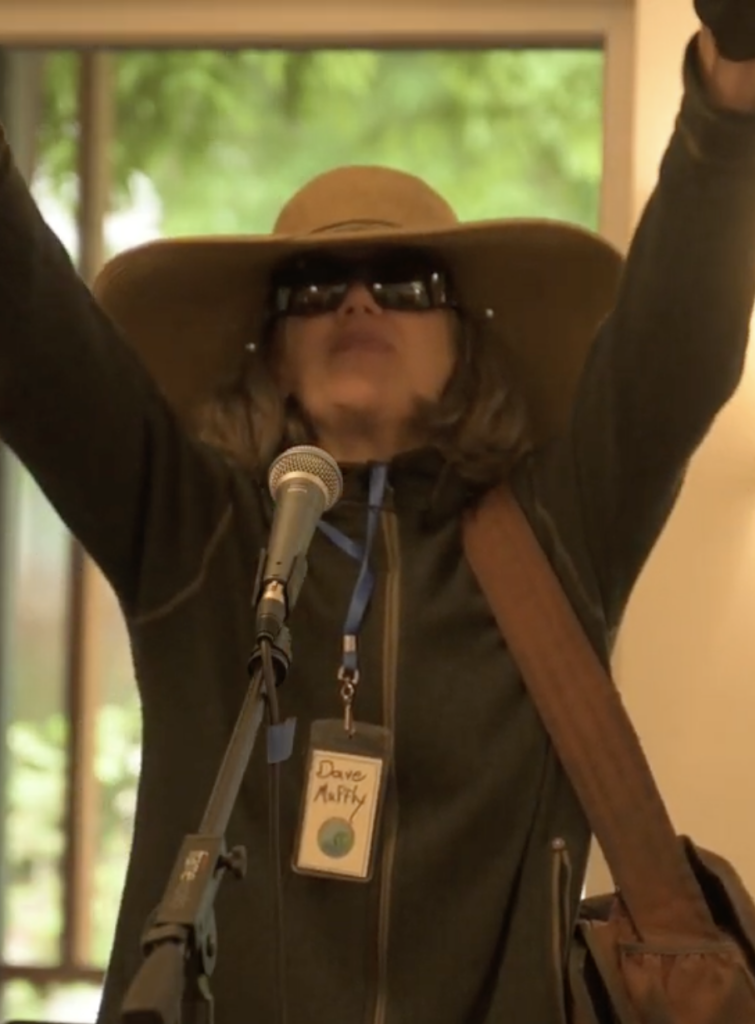
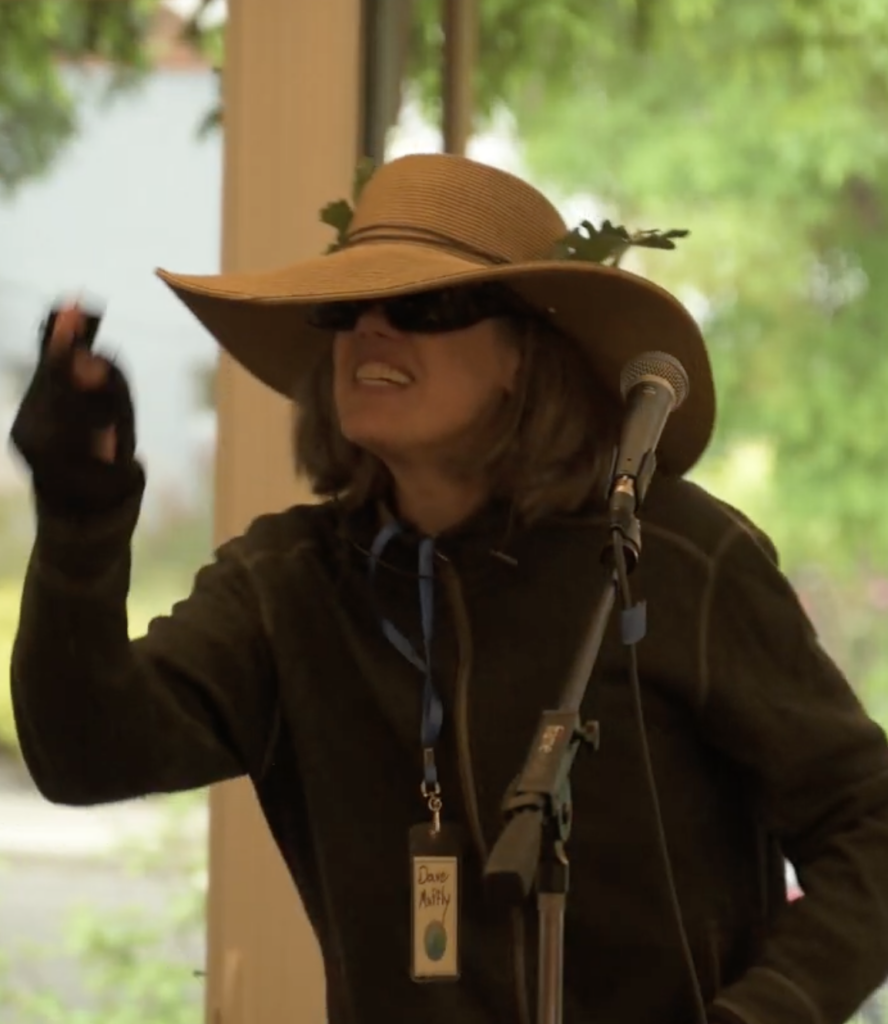
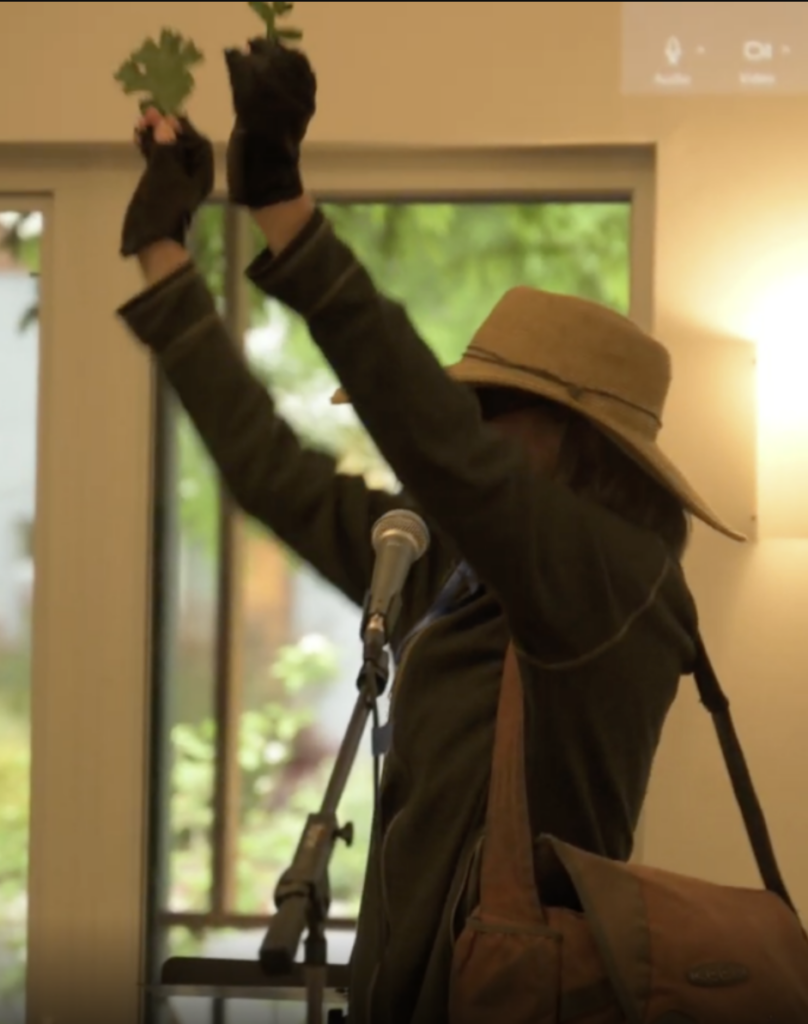
Lynn Abraham, dear friend and closest confidant, channeled her inner Dave, reminding everyone of Dave’s very distinctive dress, accessories, gestures, speech, and passions. She engaged attendees in silently remembering favorite Dave moments, and in offering aloud last words to him.
Summary (click here to view)
Spiritual connection, shared grief, and a collective goodbye.
Lynn delivered a deeply emotional and interactive tribute, affectionately referring to Dave by his email sign-off, “Danger Bunny.” Promising to continue his legacy by “planting a global forest,” she led the audience in a grounding exercise. She asked attendees to close their eyes, center themselves, and pull up their favorite memories of Dave to recognize the shared love in the room. Recognizing that many didn’t get a chance to say goodbye, she facilitated a “popcorn-style” moment where the audience shouted out final thank-yous. Finally, she led the room in a loud, communal shout of Dave’s name so that he could hear them in the afterlife.
Transcript (click here to view)
I don’t have this written down, and in front of people, it’s kind of harder to remember what you were going to say. We are so very sorry that you had to go. I know that you had so much more that you wanted to contribute. I hope that we can make you proud by continuing your legacy, and we will. In the meantime, we will be planting a global forest of Quercus muffleyi waiting for your return. We have a lot of work to do.
Let’s take a moment and connect with Dave. I’m going to ask each of you, if you want, to close your eyes. Come into your body, your physical form, ground to the earth, and find your center. Really feel the gravity of your center. There you are: you who love Dave.
Now bring your attention into your heart, and start drawing up images of Dave—your favorite memories. We’re coming back to our hearts, and just taking a moment to notice all the other hearts in the room. We are not alone in our love and admiration for Dave Muffley, AKA “Danger Bunny.” That’s what I called him. He’d send me emails saying, Signing out, Danger Bunny.
So we’re back in our hearts, feeling connected to the other hearts in the room. We open our hearts, we come into our minds and open our minds, we come into our awareness and open our awareness, and we allow Dave to connect with us, and for us to connect with Dave. We’ll take a moment of silence just being with Dave.
(Silence)
Dave, we are here to honor and celebrate your exquisitely unique, creative, wild, beautiful life. We hope you can take in our love and our gratitude.
I’m going to offer a 20-second “popcorn” style shout-out, because many of us didn’t get to say final words to him. If we all want to just shout out what we wish we could have said or want to say now. Twenty seconds. Go.
Audience members shout out: “Thank you!” “Miss you!” “Thank you for the trees!” “I loved Apocalypse Dave!” “Thanks for teaching us how to plant trees!” “Keep laughing!” “Thanks for the panniers!”
Does anybody want to venture a deep Dave yodel? Somebody want to venture a Dave sound? Let’s get a communal Dave shout. One, two, three!
(Crowd shouts)
One more time. Come on! One, two, three!
(Crowd shouts louder)
Dave, it is our wish and our blessing that with that loud sound, you finally heard us. We wish you well. Go in peace, and we can’t wait to see you again.
David Schrom, friend, Magic colleague, and partner with Dave in evolving and disseminating ecologically-informed culture, remembered Dave’s “big-picture” thinking, his commitment to the science of human ecology, and his philanthropic devotion to common good.
Summary (click here to view)
Dave’s philosophy of human ecology and his philanthropic life.
Schrom highlighted Dave’s core worldview, noting that if Dave wanted people to understand one concept, it was ecology. For Dave, trees were just the “hook”; his real passion was human ecology—the scientific study of how humans interact with one another and the rest of our surroundings, natural and artificial. Dave viewed ecology as the scientific basis for religion (from the Latin prefix re- “again” and root ligare) meaning to connect again. Schrom recalled how Dave originally came to Stanford wanting to design cars but ended up dedicating his life to humanity. He noted that Dave’s habit of planting acorns from different climates was an “evolutionary gambit” to prepare California for the future, accompanied by planting seeds of science and love in the hearts of everyone he met.
Transcript (click here to view)
Less than a year ago, Dave stood in this room and gave a presentation. After he concluded, someone asked, “What’s the one thing you most want people to know about?” With his booming radio voice, Dave spoke a single word. Surprising many, he said, “Ecology.”
Trees were his hook, but he taught a larger lesson. Today I honor Dave by remembering and reminding you that ecology is something more than a synonym for nature or the natural environment. It’s a scientific discipline. Dave’s specialty was human ecology: scientific study of interactions among us, and between us and other life, the rest of nature, and the things we’ve fashioned from nature.
Dave taught human ecology as a scientific basis for religion. With ecology, we lay bare our connections to literally re-ligare—as in ligament, to connect again—to relige. Dave saw both the horrors of our times and the promise of our intelligence and caring. He understood at a level few people do the web of ever-shifting relationships that is the biosphere.
He handed you an acorn and explained that inside it was a forecast, an evolutionary gambit, a wager on the future. He spent decades collecting acorns in places with climates that might someday be California’s, planting them here, and waiting. In those same decades, he also sowed the religing, the reconnecting, of ecology.
Dave was an all-in philanthropist. He dedicated his most valuable asset—his life—to working for the benefit of humankind. Guided by ecology, he gave his attention and his understanding to caring for each of us, and for many others alive today, or who may live in the future.
For nearly 40 years, I enjoyed the privilege of Dave’s partnership in developing and disseminating an ecological worldview. I watched a young Nebraskan who arrived at Stanford with dreams of designing cars discover that he wanted to work broadly and deeply for the good of all. To that end, he learned to plant trees in the landscape, and to plant science and loving in hearts and minds.
I anguish that he left when he did. I may for the rest of my life. But I perceive that his commitments to ecology and to common good live on in the people in this room and in countless others. As we celebrate and remember him, let’s honor him by nurturing those commitments. Thank you.
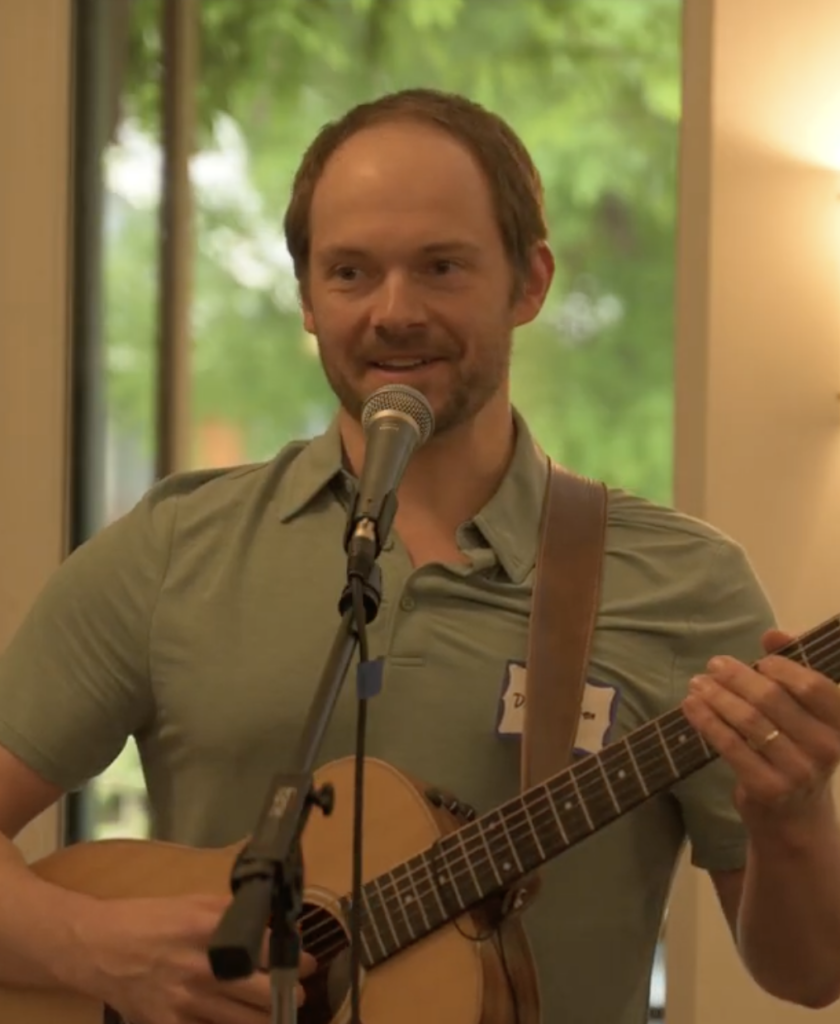
David Saxton, who met Dave while he was still in high school and looked up to him as a wise and fun-loving elder, led the group in singing “Ripple,” one of Dave’s favorite Grateful Dead songs.
Summary (click here to view)
Summary [link]
Mentorship and fond outdoor memories.
Saxton briefly spoke about his time knowing Dave during Saxton’s high school years. He described Dave as an incredible teacher and a “late bloomer” who acted like a fun, rule-breaking uncle to the younger people at Magic. He fondly recalled spending time with Dave in the hills, pulling weeds, planting trees, and getting stuck in the mud. Saxton then led the audience in “Ripple” one of Dave’s favorite Grateful Dead songs.
Transcript (click here to view)
Hello. My name is David Saxton. I knew Dave mostly when I was in high school, and I just want to echo what others have said: he was such a great teacher. I think he and I were both kind of late bloomers. Not to lean on a botanical term, but if Magic was sort of a second family for me when I was coming up, he was like the uncle who didn’t play by the rules, but who meant well. He and I had some great times in the hills, getting stuck in the mud, planting trees, pulling weeds … whatever the situation.
Hilary Hug closed the program by thanking all who’d participated in honoring the life of an extraordinary man.

Hilary Hug closed the program by thanking all who’d participated in honoring the life of an extraordinary man.

Hilary and Emily, hostess and mistress of ceremonies, enjoy a moment of mutual appreciation after the conclusion of the program.
Among many delicious contributions to the potluck was this cake with an oak tree of frosting prepared by Doug Wildman.
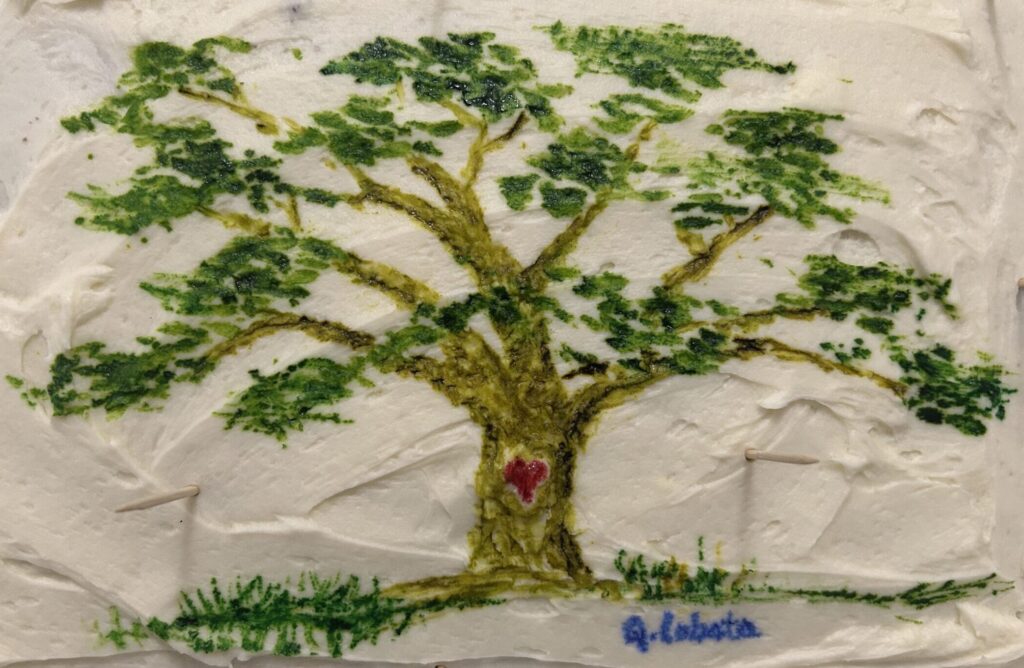
Among many delicious contributions to the potluck was this cake with an oak tree of frosting prepared by Doug Wildman.

Sunday morning, the day after the gathering at Magic, a few stalwarts took to the field to sustain Dave’s legacy by caring for oaks of species selected for climate resilience that he’d grown from seed.
Emily Griswold, UC Davis horticulturalist who’d assisted Dave in gaining a wider audience for his work, prunes one of his trees during the Sunday fieldwork session.
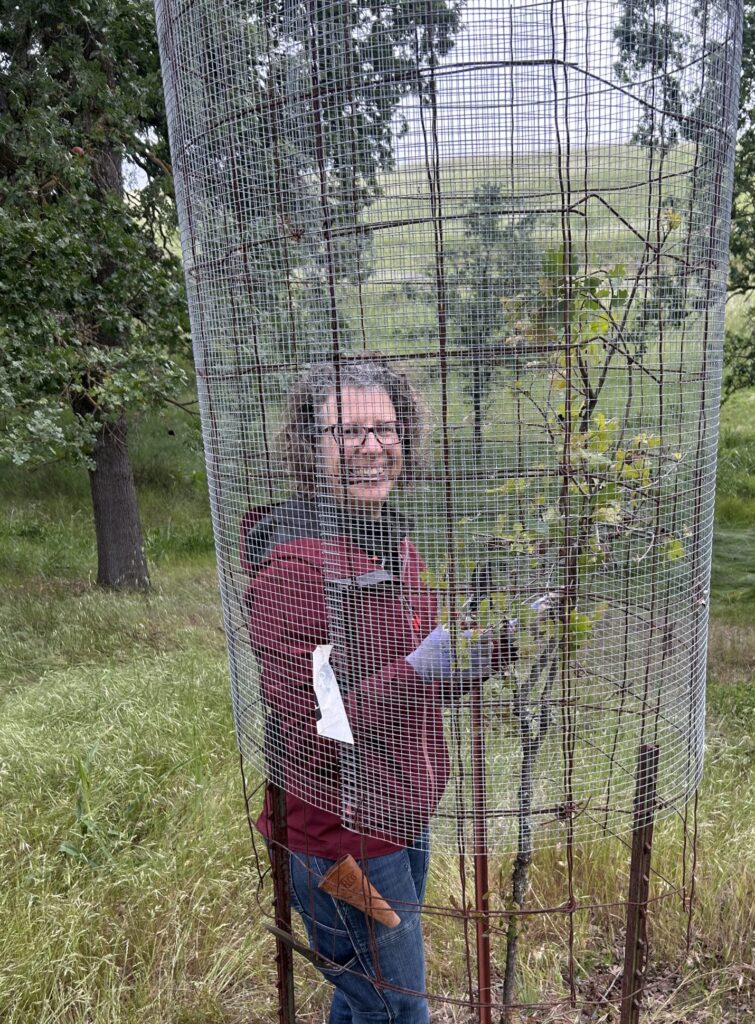
Emily Griswold, UC Davis horticulturalist who’d assisted Dave in gaining a wider audience for his work, prunes one of his trees during the Sunday fieldwork session.
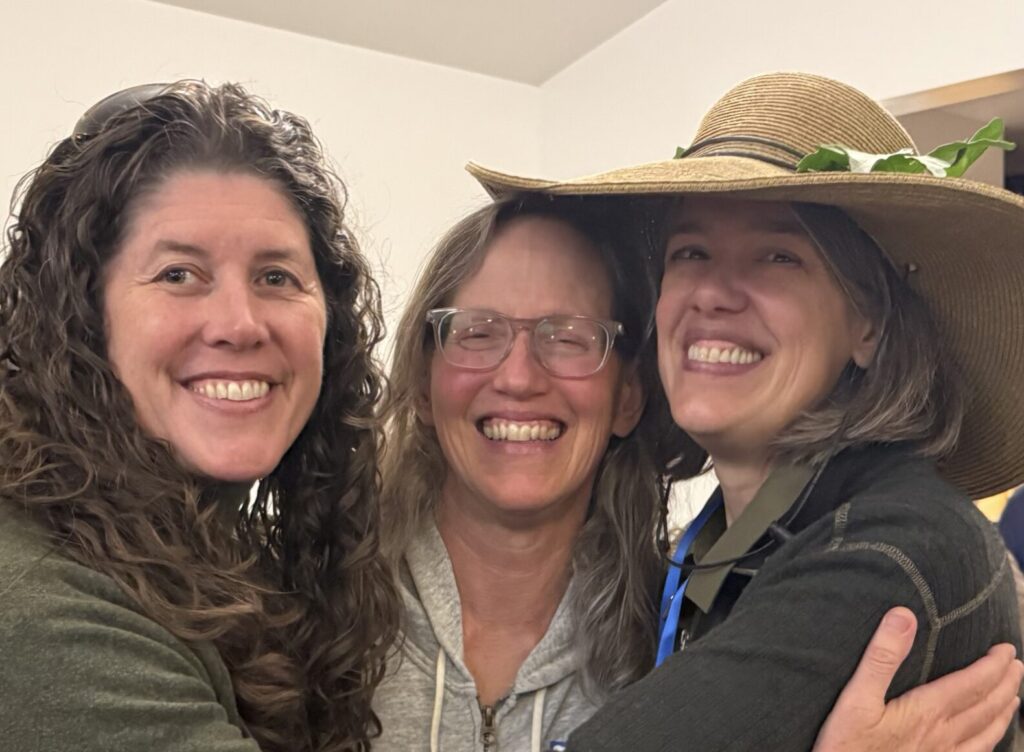
Heather Brady, Hilary Hug, and Lynn Abraham, all dear longtime friends of Dave, led in organizing and producing the celebration.
Dave understood that “the best time to plant a tree was yesterday.” We honor him by emulating his self-described “bipedal squirrel with opposable thumbs” and planting. We honor him also by caring for trees already here, and by ensuring that this Earth remains an hospitable home for them and for the human species that relies upon them.
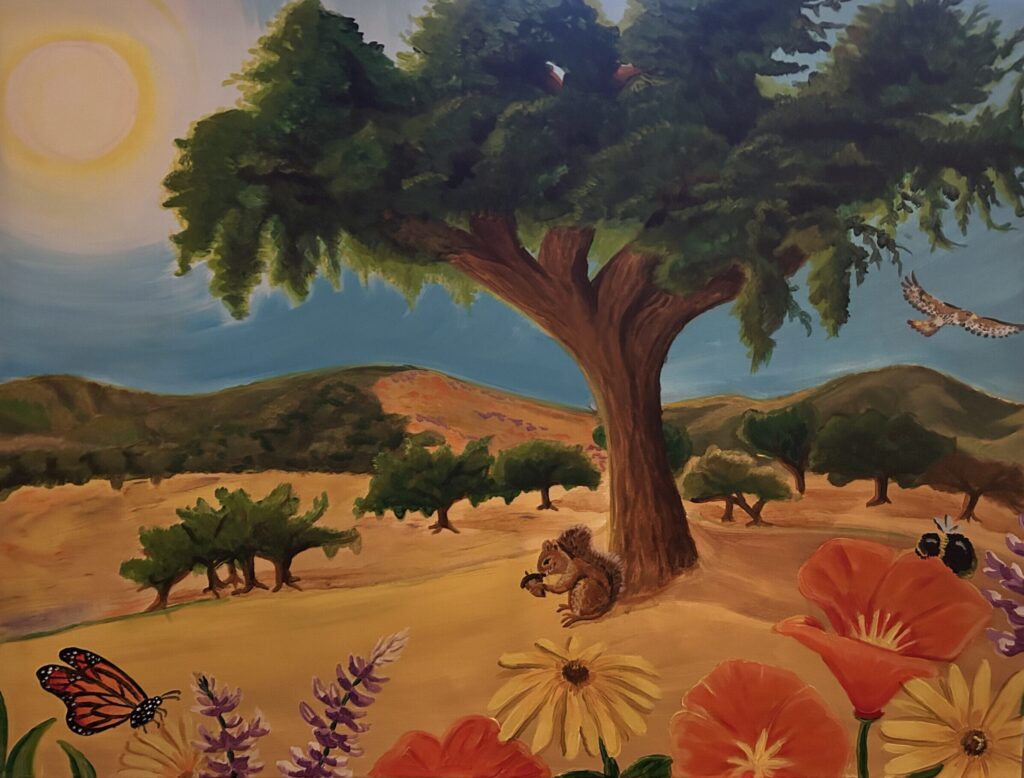
Dave understood that “the best time to plant a tree was yesterday.” We honor him by emulating his self-described “bipedal squirrel with opposable thumbs” and planting. We honor him also by caring for trees already here, and by ensuring that this Earth remains an hospitable home for them and for the human species that relies upon them.